The Future of AI Video Generation for Brands and Content Creators
AI video models now produce short, realistic clips with sound, consistent characters and cinematic camera moves. Here's where the technology stands in 2026, how it fits into real productions, and what brands should plan for next.
In this article
Two years ago, AI video meant a few seconds of dreamlike footage with melting hands. In 2026, leading models such as Google’s Veo 3.1, Kuaishou’s Kling 3.0 and Runway’s Gen-4.5 generate short, high-resolution clips with convincing motion, and several produce synchronised dialogue and sound effects in the same pass. The question for brands is no longer whether AI video is usable. It’s where it belongs in a production.
Where the technology is today
The capabilities that matter most for commercial work:
- Higher fidelity. Leading models output 1080p and, in some cases, 4K, with lighting and materials that hold up on a large screen.
- Native audio. Some models generate dialogue, ambience and effects together with the picture, which removes a whole stage of post-production for simple scenes.
- Better consistency. Keeping a character, product or location stable across several shots has improved, using reference images and multi-shot generation.
- More camera control. Directors can describe moves — a slow push-in, a crane up, an orbit — and expect them to be followed more closely.
There are still clear limits. Clips are short, typically seconds rather than minutes. Text and logos can distort. Exact product accuracy is unreliable. And every model has its own look, which can make different tools hard to mix in one edit.
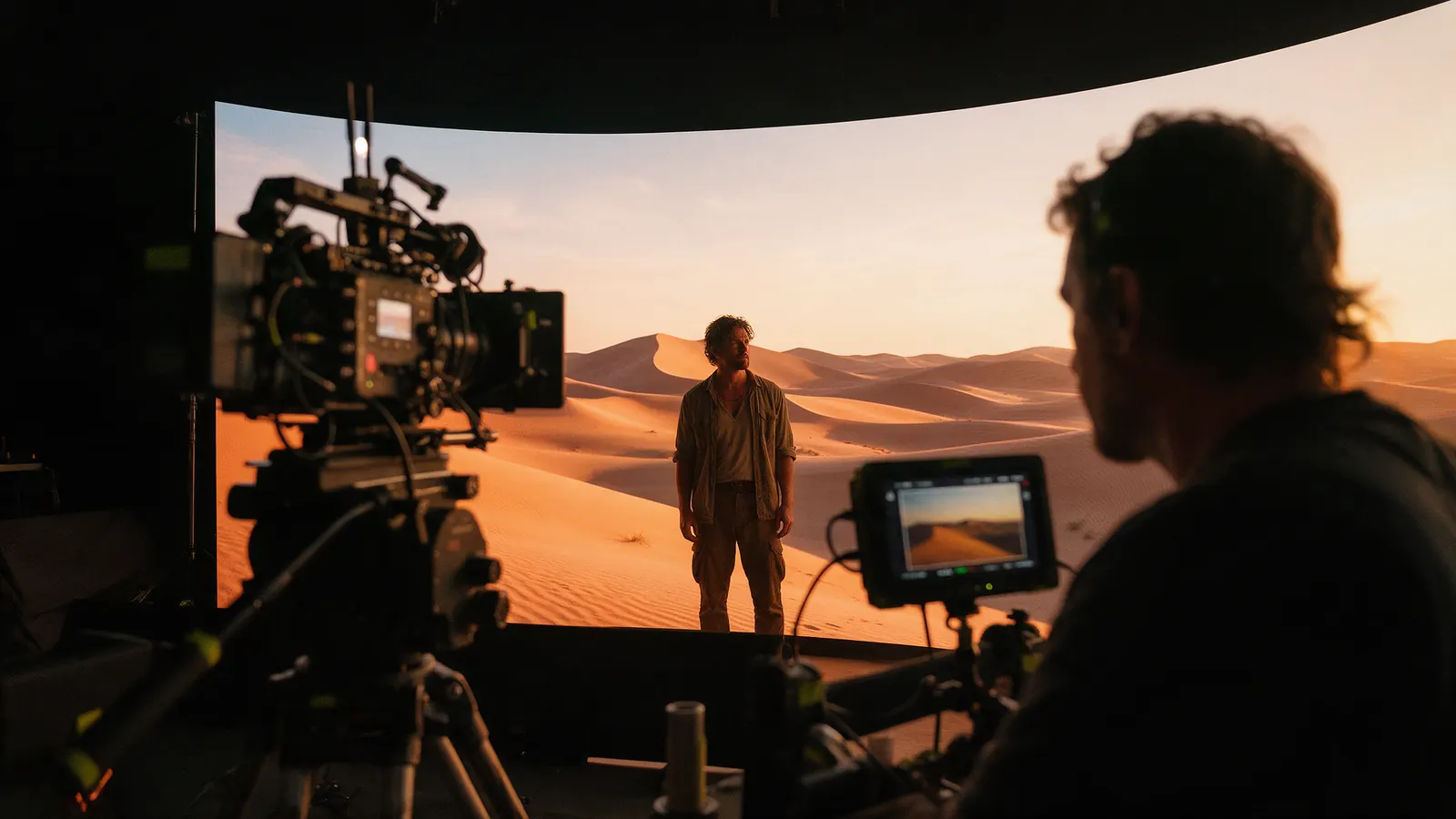
How AI complements traditional production
The most useful way to think about AI video is as a set of new departments in a familiar production, not a replacement for it.
Pre-production
Moving storyboards and animatics can be generated from a script in hours. Clients see the pacing, framing and mood before anyone books a location, so decisions happen earlier and with more confidence.
Environments and B-roll
Establishing shots, skylines, abstract textures, weather and impossible locations are a natural fit for generation. They sit around footage of the real product and real people, which a camera still captures best.
Post-production
AI tools help extend backgrounds, remove objects, relight scenes, translate voiceovers, create versions in other languages and reformat a horizontal film into vertical cuts. These are time-consuming jobs that rarely add creative value when done by hand.
Iteration and testing
Because variations are cheap, a brand can test several openings, colour moods or calls to action, then put more budget behind the version audiences respond to.
What this means for brands
- Production becomes continuous. Instead of one big shoot a year, brands can refresh content monthly, building on core footage with generated variations.
- Direction matters more, not less. When anyone can generate a beautiful clip, the advantage moves to people who know what the brand should look and sound like.
- Real footage becomes more valuable. Authentic moments with real customers, staff and products are harder to fake and carry more trust.
- Disclosure is part of the plan. The EU AI Act’s transparency rules, in force since August 2026, require labelling for certain realistic AI-generated content, and platforms have their own policies. Building disclosure into the workflow avoids problems later.
What it means for content creators
For individual creators, AI video lowers the cost of ambition. A solo creator can now add an establishing shot of a city they never visited, a dream sequence or a stylised intro. The risk is sameness: when the same models are available to everyone, a recognisable personal style, real storytelling and on-camera presence are what keep an audience.
A healthy workflow for creators:
- Shoot the moments that need to be real.
- Use AI for scenes that would be impossible, dangerous or too expensive.
- Grade everything together so it feels like one film.
- Keep project files and prompts organised, so a look can be repeated.
An example: a product launch, start to finish
Imagine a skincare brand launching a new serum. A hybrid plan could look like this:
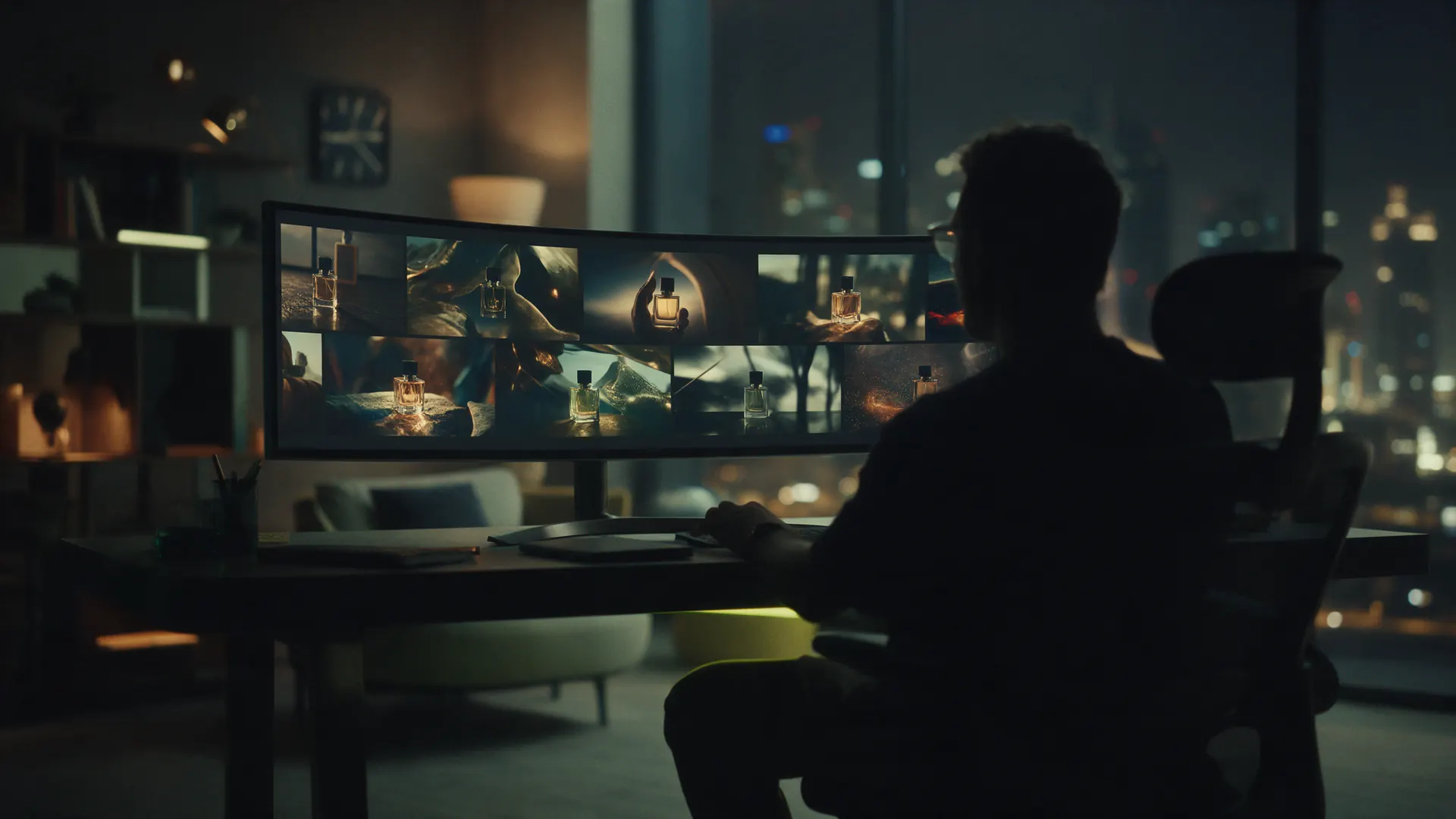
- Concept: three visual directions generated as short moving moodboards — botanical, laboratory-clean and desert-dawn — so the team chooses one in a single meeting.
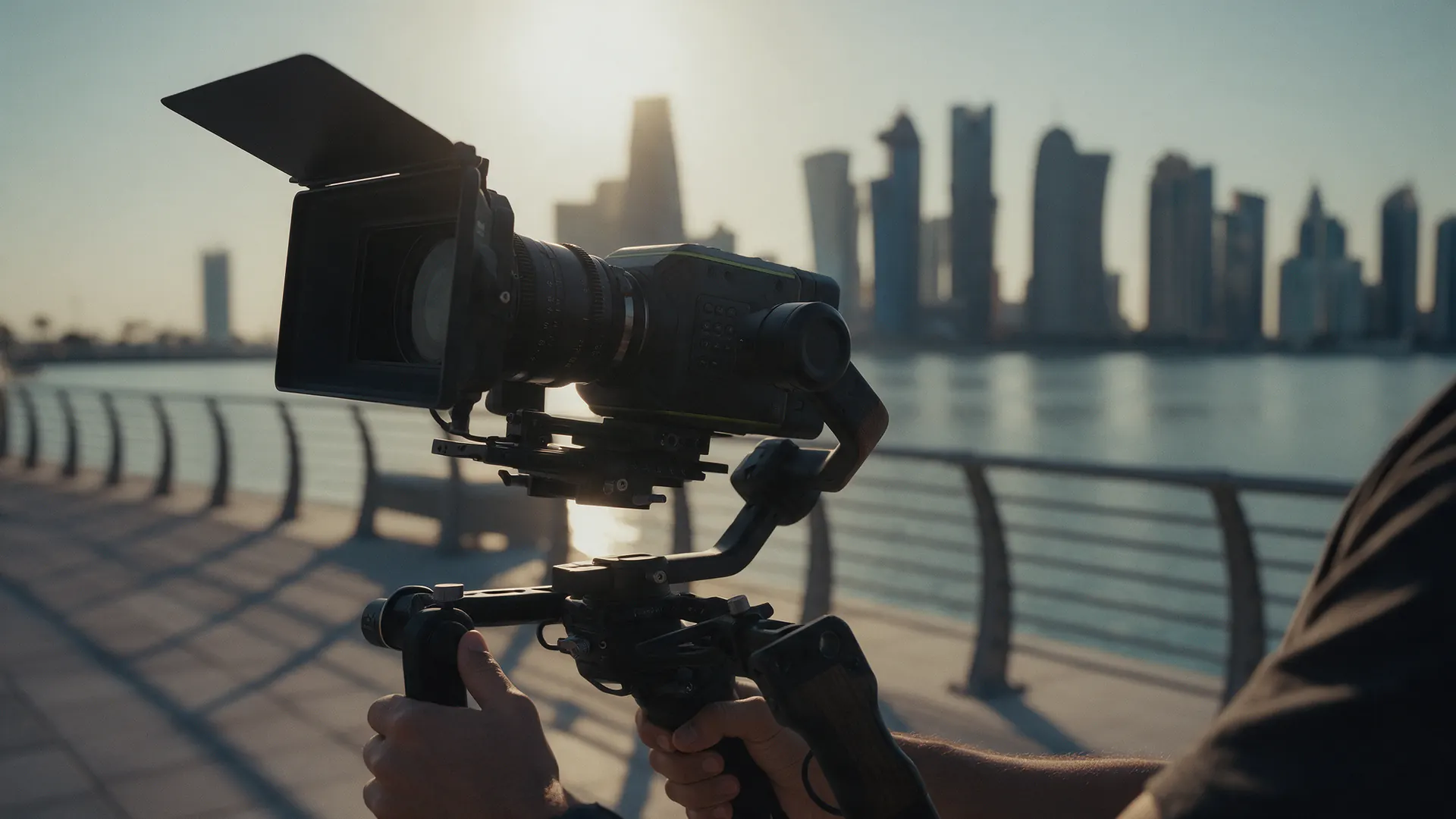
- Shoot: one studio day for the real product, hands applying it and a founder speaking to camera, because accuracy and trust matter most here.
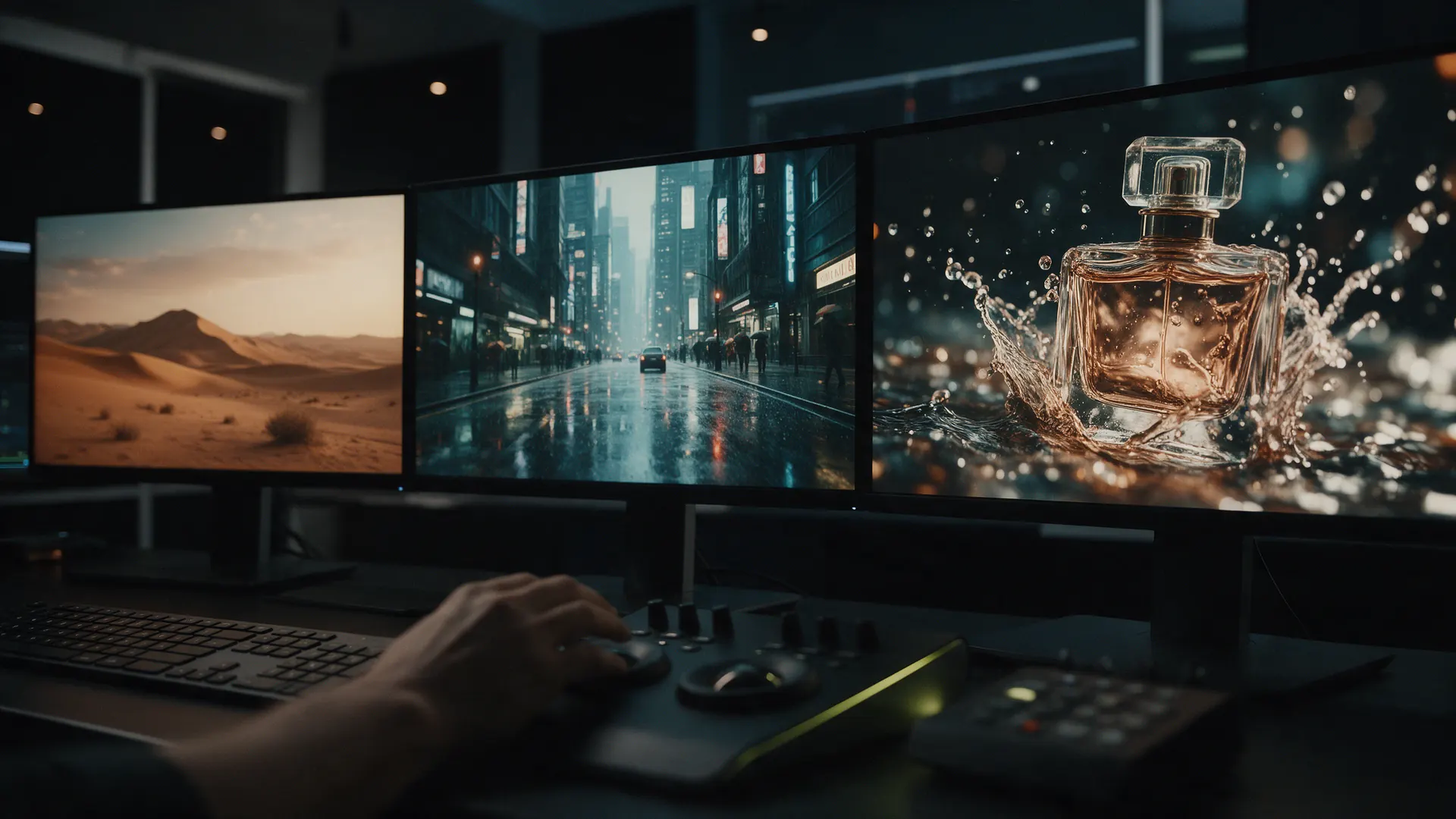
- Generation: a slow, abstract opening of light through liquid and a desert-dawn establishing shot, created to match the chosen palette.
- Edit and grade: real and generated shots cut together and graded as one film, with titles from the brand’s motion toolkit.
- Versions: a 30-second hero film, 6-second hooks for Reels and TikTok, and Arabic and English subtitles, with any realistic AI imagery disclosed where required.
The real footage carries the product and the people; the generated footage carries the mood. That division of labour is where AI video earns its place.
Looking ahead
Expect longer clips, tighter control over characters and products, and tools that edit generated footage shot by shot rather than regenerating everything. Expect provenance standards and labelling to become routine. And expect the best work to keep coming from teams that combine a camera, an editor’s judgement and generative tools in one process.
If you’re planning video for your brand and want a mix of real production and AI-assisted visuals, explore my motion graphics and social media reels services, see recent work, or tell me about your project.