Why AI-Generated Advertising Is Essential for Businesses in 2026
AI can now produce commercials, product scenes and dozens of ad variations in the time a traditional shoot takes to plan. Here is what that changes for businesses, where it falls short, and how to use it without losing your brand.
In this article
A year ago, most conversations about AI in advertising were about what might be possible. In 2026 the conversation has moved on. The major ad platforms now build generative tools directly into the place where campaigns are created, video models can produce short, convincing scenes with synchronised sound, and brands of every size are using them, whether they say so or not.
That doesn’t mean a prompt replaces a production. It means the cost of trying an idea has dropped close to zero, and that changes how good advertising gets made.
What “AI-generated advertising” actually means now
The phrase covers a wide range of work, and it helps to separate it:
- Fully generated ads. Scenes, products and sometimes people created by an image or video model. Useful for concepts, abstract brand films and visuals that would be impossible or expensive to shoot.
- AI-assisted production. A real shoot, with AI used for background extension, clean-up, relighting, translation, voiceover or resizing into every format a campaign needs.
- Platform-generated variations. The ad platform itself creating new backgrounds, crops, copy and video versions from the assets you upload, then testing them.
At Cannes Lions 2026, Meta presented its AI advertising tools as an end-to-end system for creating, testing and launching ads, including a shared Creative Strategy Space where creative and media teams work from the same campaign insights. Whatever platforms you advertise on, the direction is clear: creative is becoming something you generate, test and refine continuously, not something you deliver once.
Why it matters for your business
1. Speed from idea to screen
A traditional commercial moves through brief, concept, storyboard, pre-production, shoot and edit. Weeks pass before anyone sees a frame. With generative tools, a creative team can show a client moving visual concepts in the first meeting. Bad ideas die early and cheaply, and good ones arrive at the shoot already proven.
2. Volume without a matching rise in cost
Modern campaigns need more than one hero ad. They need vertical cuts for Reels and TikTok, square versions for feeds, 6-second bumpers, Arabic and English variants, seasonal versions for Ramadan or National Day. AI makes producing that range realistic for a business that couldn’t fund ten separate shoots.
3. Personalisation that’s actually practical
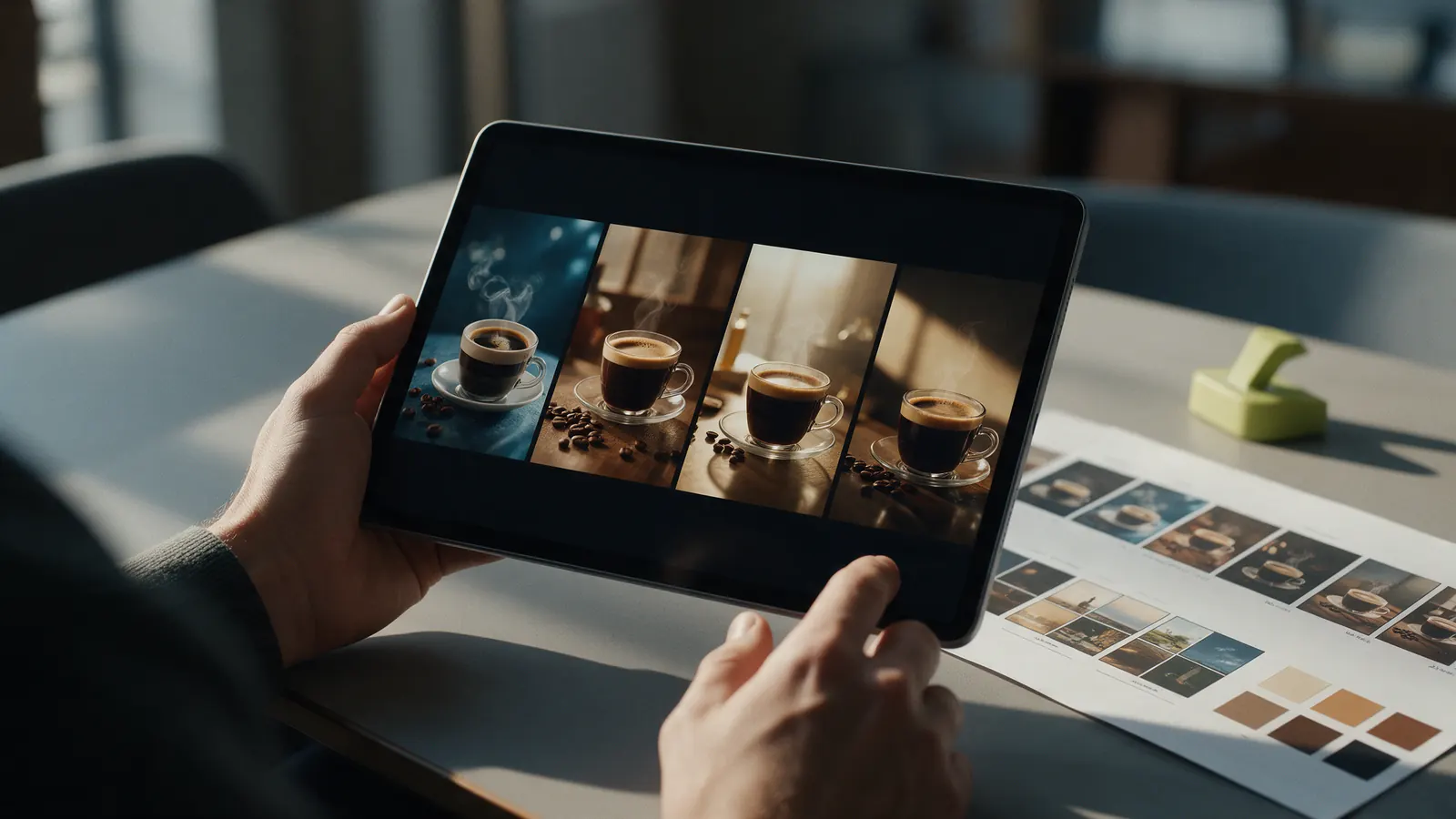
Personalised creative used to mean swapping a headline. Now it can mean a different setting, model, product angle or language for different audiences, generated from the same core idea. A café can show its morning menu to commuters and its desserts to the evening crowd, with visuals made for each.
4. Creative possibilities that were out of reach
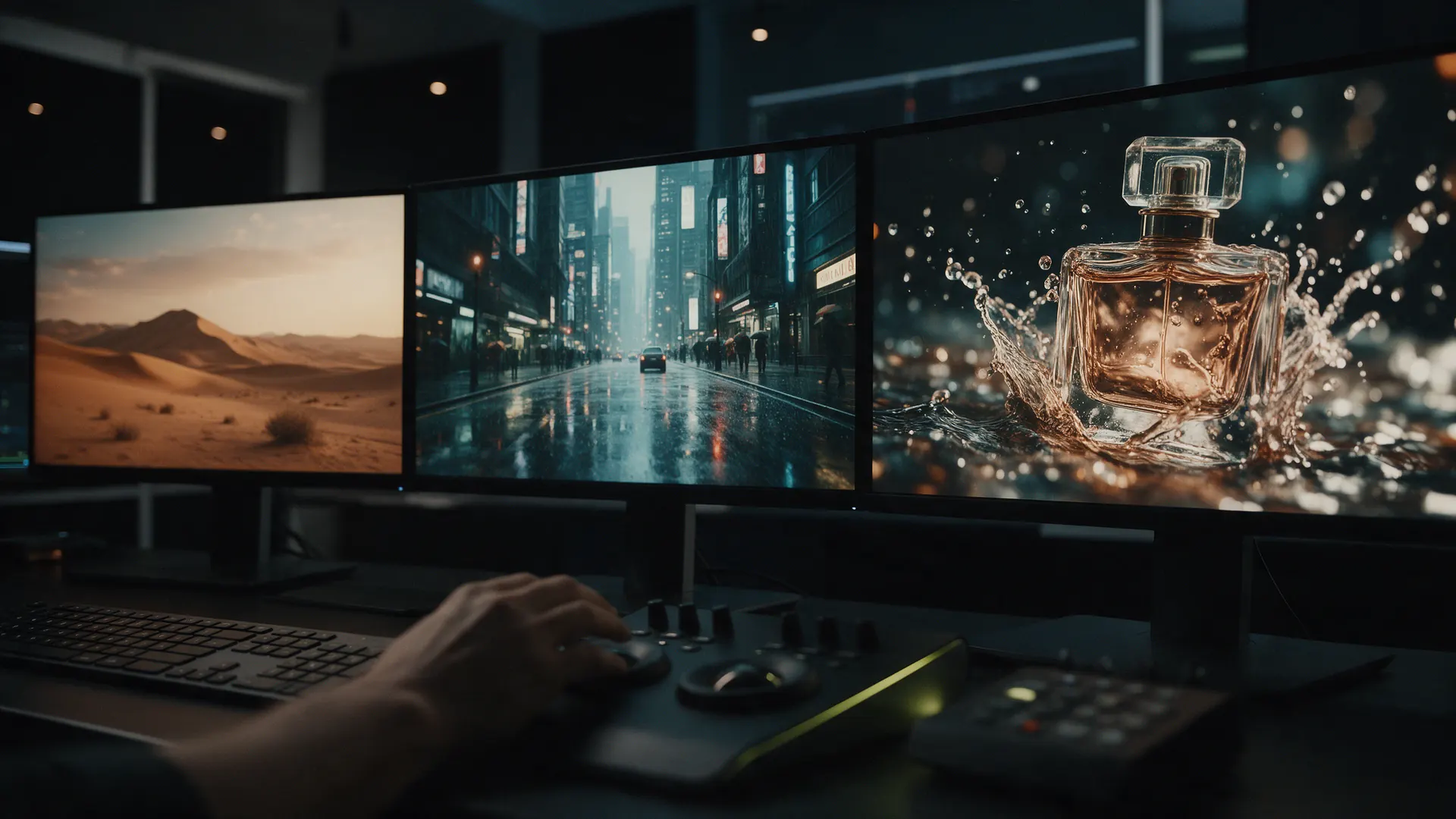
A product floating through a sandstorm, a perfume bottle dissolving into liquid gold, a city transforming from day to night in one move: shots like these used to need a VFX budget. Generative video brings them within reach of a mid-sized brand, which raises the bar for everyone.
Where AI still falls short
It’s worth being honest about the limits, because they decide where your money should go.
- Real products and real people. If the ad must show your actual product accurately, your actual team or your actual venue, a camera is still the most reliable tool. Models can drift on logos, labels, text and fine product details.
- Consistency across a campaign. Holding the same character, outfit and lighting across many shots is improving, but still takes careful direction and often several attempts.
- Taste. A model will produce something polished-looking on the first try. Whether it says the right thing about your brand is still a human decision.
- Rights and trust. Know what each tool’s terms allow for commercial use, and avoid generating anything that imitates a real person, brand or copyrighted work.
The new rules on labelling
Transparency is now part of the job. Since 2 August 2026, the EU AI Act’s transparency obligations apply, including requirements to label certain AI-generated or manipulated content such as realistic deepfakes. These rules can reach businesses outside Europe when their content is used in the EU. Platforms also apply their own disclosure rules.
The practical takeaway for a brand in Qatar or anywhere else: if an ad shows realistic people or events that never happened, plan to disclose it. Being upfront protects trust, and trust is what advertising is for.
How to start without wasting budget
- Pick one campaign, not your whole brand. A seasonal promotion or a product launch is a good test.
- Use AI for exploration first. Generate concepts and mood frames before committing to a shoot or a final direction.
- Combine it with real footage. Shoot the product and the people for real, and use AI for environments, transitions, variations and formats.
- Build a brand rulebook for prompts. Colours, lighting, tone, what your brand never does. It keeps every generated asset consistent.
- Test variations against each other. Let real audience response, not opinions in a meeting, decide which version scales.
- Keep a human sign-off on everything. Check accuracy, rights, cultural fit and disclosure before anything goes live.
The bottom line
AI-generated advertising isn’t a shortcut around creativity. It’s a faster way to find the idea that works and a cheaper way to deliver it in every format your audience sees. The brands that benefit most in 2026 are the ones that treat it as part of a production process, with clear direction, real footage where it matters and honest disclosure.
If you’d like to explore AI-assisted ads for your next campaign, take a look at how I approach social media reels and motion graphics, browse recent work, or start a conversation about your project.